How to Do Keyword Research as a Beginner (2026 Guide)
Starting a blog is easier than ever.
You can create a website in one day, publish your first article, and start sharing your ideas with the world.
But many beginners quickly discover a frustrating problem:
They publish articles, but almost nobody visits.
The problem is usually not the writing.
The problem is that they create content without knowing whether people are actually searching for those topics.
A successful blog is not built by randomly publishing articles.
It is built by understanding your audience, discovering what they search for, and creating content that solves real problems.
This is where keyword research becomes one of the most important skills for beginner bloggers.
Keyword research helps you discover:
- what your audience is searching for
- what questions they have
- what topics have traffic potential
- what content you should create next
The good news is that keyword research does not need to be complicated.
You do not need years of SEO experience or expensive tools to get started.
With a simple process, beginners can find valuable keywords and create content that has a better chance of attracting organic traffic.
In this guide, you will learn how to do keyword research as a beginner, including how to find keyword ideas, understand search intent, evaluate competition, and turn keywords into a practical content plan.

What Is Keyword Research?
Keyword research is the process of finding and analyzing the words and phrases people type into search engines.
These words and phrases are called keywords.
For example:
Someone wants to build a website.
They might search:
“how to create a WordPress website”
Someone wants better hosting.
They might search:
“best website hosting for beginners”
Someone wants to start affiliate marketing.
They might search:
“how does affiliate marketing work”
Every search represents a problem, question, or goal.
Your job as a blogger is to understand those searches and create content that provides the best possible answer.
A keyword is not just a phrase.
It represents:
A person with a problem
↓
A search query
↓
A content opportunity
Many beginner bloggers focus only on writing.
Experienced bloggers focus on writing the right content for the right audience.
Why Keyword Research Matters for Beginner Bloggers
Without keyword research, blogging becomes a guessing game.
You may spend hours creating an article that nobody searches for.
For example:
A beginner might write:
“My Favorite Business Tools”
But users may search:
“Best Tools for Solopreneurs”
The second topic is more valuable because it matches an existing search demand.
Good keyword research helps you:
Create Content People Actually Want
Instead of asking:
“What do I want to write about?”
You ask:
“What information is my audience already looking for?”
This small change completely changes your content strategy.
Build Consistent Organic Traffic
Search engines need to understand what your content is about.
Using relevant keywords naturally helps Google understand:
- your topic
- your audience
- your content purpose
However, keyword research is not about repeating keywords everywhere.
Modern SEO focuses more on creating useful content that satisfies the reason behind a search. Search intent is the reason why someone searches for a specific phrase, and matching that intent is an important part of successful SEO. Ahrefs
Find Easier Opportunities
Many beginners target extremely competitive keywords.
For example:
“SEO”
“Online business”
“Make money online”
These topics are dominated by large websites.
A new website usually has better opportunities with more specific keywords.
Instead of:
“AI tools”
Try:
“Best AI Writing Tools for Bloggers”
Instead of:
“Website hosting”
Try:
“Best Website Hosting for Beginners”
Specific keywords usually have clearer search intent and are easier to create targeted content around.
[Find Blog Topics People Are Searching For →]
Step 1: Understand Your Audience Before Finding Keywords
One of the biggest mistakes beginners make is starting with SEO tools.
They open Ahrefs, Semrush, or keyword planners immediately.
But good keyword research starts with people, not tools.
Before finding keywords, ask:
Who am I helping?
What problems do they have?
What questions are they asking?
For SoloBizStack, the target audience is:
- beginner entrepreneurs
- bloggers
- creators
- small website owners
- solopreneurs building online businesses
Their problems may include:
Building A Website
Possible searches:
How much does it cost to build a website?
Best hosting for beginners
How to create a WordPress website
Creating Content
Possible searches:
How to write blog posts faster
Best AI writing tools for bloggers
How to create blog images without a designer
Growing Traffic
Possible searches:
How to find blog topics
How to do keyword research
Best SEO tools for small websites
Monetizing A Website
Possible searches:
How does affiliate marketing work?
How to start affiliate marketing with a small website
What should solopreneurs outsource?
Your audience’s problems are the starting point for keyword research.
The best keywords usually come from understanding what people need help with.
Step 2: Start With Seed Keywords
A seed keyword is a broad topic that helps you discover more specific keywords.
Think of it as the starting point of your research.
For example:
Seed keyword:
WordPress
Possible keyword ideas:
- WordPress hosting
- WordPress themes
- WordPress plugins
- WordPress website checklist
Another example:
Seed keyword:
AI tools
Possible keyword ideas:
- AI writing tools for bloggers
- AI image generators for creators
- AI tools for small business
Another example:
Seed keyword:
Affiliate marketing
Possible keyword ideas:
- affiliate marketing for beginners
- best affiliate programs
- how to start affiliate marketing
At this stage, do not worry about finding the perfect keyword.
Your goal is collecting possible opportunities.

Step 3: Use Google Search To Find Keyword Ideas
Google itself is one of the best free keyword research tools.
It shows you what real users are searching for.
Google Autocomplete
Start typing a topic into Google.
Example:
Best AI tools for…
Google may suggest:
- best AI tools for bloggers
- best AI tools for content creators
- best AI tools for small business
These suggestions are based on real searches.
People Also Ask
The People Also Ask section is another valuable source.
Example:
Search:
keyword research
You may see questions like:
- What is keyword research?
- How do beginners find keywords?
- What tools are used for keyword research?
Each question could become a useful blog article.
Related Searches
At the bottom of Google results, you can find related searches.
These help you discover:
- supporting keywords
- article angles
- related topics
[Learn How To Find Blog Topics →]
Step 4: Use Keyword Research Tools
After collecting keyword ideas from Google, the next step is checking whether those keywords are worth targeting.
Keyword research tools help you understand:
- how many people search for a topic
- how competitive the keyword is
- related keyword ideas
- what type of content is ranking
You do not need every SEO tool available.
Many beginners make the mistake of spending too much time collecting data instead of creating content.
A simple research process is usually enough.
Free Keyword Research Tools For Beginners
Google Keyword Planner
Google Keyword Planner is designed mainly for advertisers, but bloggers can also use it to discover keyword ideas.
It helps you find:
- related keywords
- search trends
- approximate search demand
It is a good starting point when you are building your first content plan.
Google Trends
Google Trends helps you understand how interest changes over time.
For example:
You can compare:
“AI writing tools”
vs
“content writing software”
and see which topic has stronger search interest.
It is useful for finding:
- growing topics
- seasonal trends
- changing audience interests
Google Search Console
Once your website has some traffic, Google Search Console becomes extremely valuable.
It shows:
- keywords your website already appears for
- pages getting impressions
- opportunities to improve rankings
For example:
You may discover that an article ranks on page two for a keyword.
Updating and improving that article may help it reach page one.
Paid Keyword Research Tools
If you want deeper SEO data, paid tools can help.
Popular options include:
- Ahrefs
- Semrush
- Ubersuggest
They can provide:
- keyword difficulty
- competitor analysis
- backlink information
- keyword suggestions
However, beginners should remember:
A good content strategy matters more than expensive software.
A simple keyword researched article can outperform a poorly planned article created with expensive tools.

[Explore SEO Tools for Small Websites →]
Step 5: Understand Search Intent
Finding keywords is only half the process.
You also need to understand why people search for those keywords.
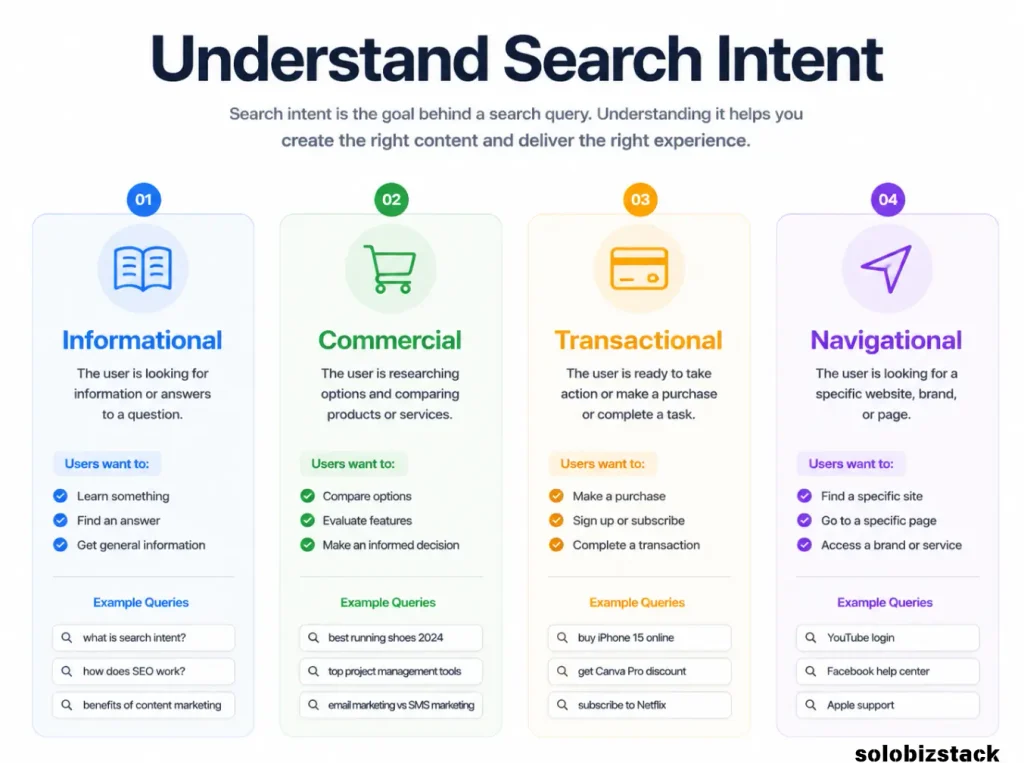
This is called search intent.
Search intent means:
“What is the user trying to accomplish?”
Understanding intent helps you create the right type of content.
Four Main Types of Search Intent
1. Informational Intent
The user wants to learn something.
Examples:
- how to start a blog
- what is affiliate marketing
- how to do keyword research
Best content formats:
- tutorials
- beginner guides
- educational articles
2. Commercial Intent
The user is researching before making a decision.
Examples:
- best AI writing tools for bloggers
- Hostinger vs SiteGround
- best SEO tools for small websites
Best content formats:
- comparisons
- reviews
- buying guides
3. Transactional Intent
The user is ready to take action.
Examples:
- buy website hosting
- subscribe to SEO software
- purchase WordPress theme
Best content formats:
- product pages
- landing pages
- recommendation pages
4. Navigational Intent
The user is looking for a specific website or brand.
Examples:
- Rank Math login
- Canva homepage
- Hostinger dashboard
Before choosing a keyword, search it on Google.
Look at the results.
Ask:
Are most results guides?
Are they reviews?
Are they product pages?
Google is showing you what type of content users expect.
Step 6: Find Long-Tail Keywords
Many beginners focus only on broad keywords.
This creates unnecessary competition.
A better approach is finding long-tail keywords.
Long-tail keywords are longer and more specific search phrases.
Example:
Broad keyword:
SEO tools
Long-tail keyword:
best SEO tools for small websites beginners
Broad keyword:
AI tools
Long-tail keyword:
best AI writing tools for bloggers
Broad keyword:
website hosting
Long-tail keyword:
best website hosting for beginners
Why are long-tail keywords valuable?
Because they usually have:
- clearer search intent
- lower competition
- more targeted visitors
Someone searching:
“best AI writing tools for bloggers”
already knows what they need.
This person is more valuable than someone searching:
“AI”
Step 7: Analyze Keyword Competition
A keyword may look attractive, but competition matters.
Before choosing a keyword, search it on Google.
Study the first page.
Look at:
Who Is Ranking?
Are the results dominated by:
- large companies?
- famous websites?
- established blogs?
If yes, it may be difficult for a new website.
Is The Content Outdated?
Look for opportunities.
For example:
A ranking article may:
- have outdated screenshots
- miss beginner explanations
- lack examples
- ignore recent tools
You can create something better.
Can You Provide A Better Answer?
Ask:
Can my article be more useful?
Can I explain it more simply?
Can I include better examples?
For a beginner website, the goal is not competing with everyone.
The goal is finding topics where you can provide the best answer.
Step 8: Create A Keyword List
Do not keep keyword ideas scattered across different notes.
Create a simple content spreadsheet.
Example:
| Keyword | Search Intent | Content Type | Priority |
|---|---|---|---|
| best hosting for beginners | Commercial | Review | High |
| how to do keyword research | Informational | Guide | High |
| AI writing tools for bloggers | Commercial | Comparison | High |
| Pinterest SEO beginners | Informational | Tutorial | Medium |
A keyword list helps you:
- plan future articles
- avoid duplicate topics
- build content clusters
- track progress
A beginner-friendly workflow:
First collect ideas.
↓
Then check search intent.
↓
Then analyze competition.
↓
Finally choose your article topic.
Do not choose keywords only because they have high search volume.
Choose keywords that match your audience and business goals.
Step 9: Turn Keywords Into Blog Articles
A keyword is not your final article.
It is the starting point.
One keyword can become multiple content ideas.
Example:
Main keyword:
Keyword research
Possible articles:
Beginner Guide
How to Do Keyword Research as a Beginner
Topic Discovery
How to Find Blog Topics People Are Searching For
Tool Guide
Best Keyword Research Tools for Bloggers
Strategy Article
How To Create An SEO Content Plan For A New Website
This approach helps you create a complete resource instead of isolated articles.
[Create Better Blog Content Faster →]
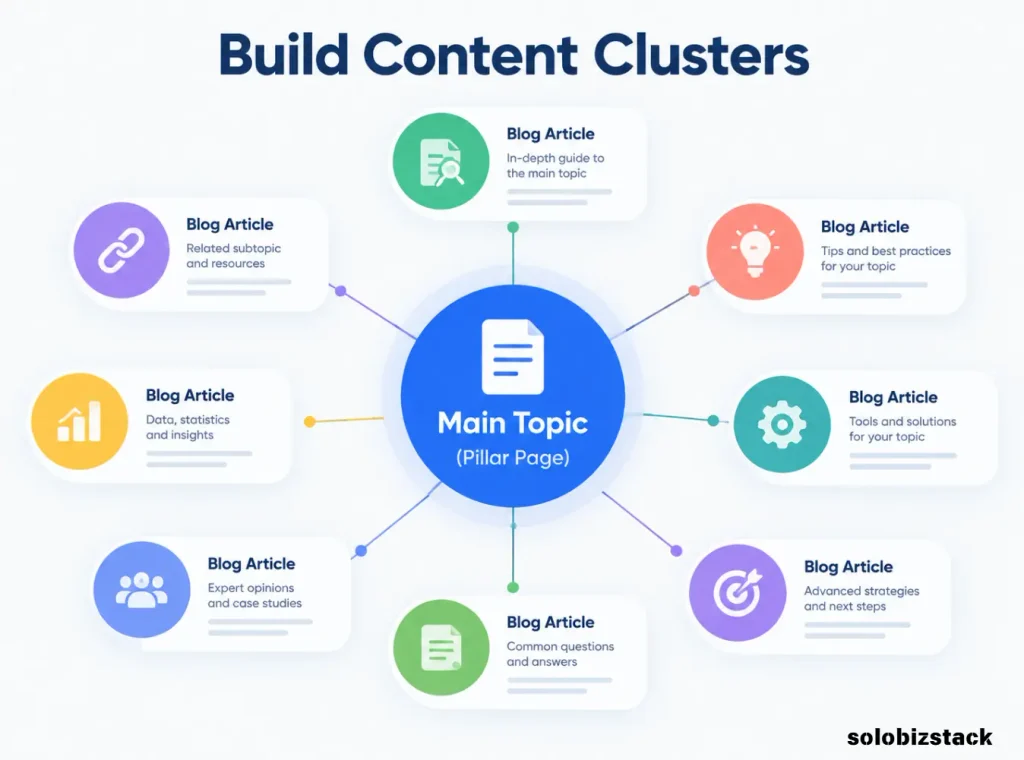
Step 10: Build SEO Content Clusters
Successful websites usually do not publish random articles.
They organize related content into topic clusters.
A topic cluster includes:
One main guide
Several supporting articles
For example:
Main topic:
Keyword Research
Supporting articles:
- How to Find Blog Topics People Are Searching For
- How to Do Keyword Research as a Beginner
- Best SEO Tools for Small Websites
- Pinterest Keyword Research for Beginners
This structure helps:
- readers discover related content
- search engines understand your expertise
- improve internal linking
For SoloBizStack, the content journey could look like this:
Discover Topics
↓
How to Find Blog Topics People Are Searching For
↓
Research Keywords
↓
How to Do Keyword Research as a Beginner
↓
Create Content
↓
How to Create Blog Content Faster as a Solopreneur
↓
Grow Traffic
↓
Best SEO Tools for Small Websites
Common Keyword Research Mistakes Beginners Make
Mistake 1: Choosing Keywords Only By Search Volume
Many beginners think:
More searches = better keyword.
Not always.
A keyword with fewer searches but stronger intent may bring better results.
Mistake 2: Ignoring Search Intent
A keyword is not just a phrase.
It represents what someone wants.
Always understand the user’s goal before writing.
Mistake 3: Targeting Extremely Broad Topics
New websites usually cannot compete with huge websites.
Instead of:
“SEO”
Try:
“SEO tips for small websites”
Mistake 4: Creating Content Without A Plan
Publishing random articles makes it harder to build authority.
Create connected content instead.
A Simple Beginner Keyword Research Workflow
You can follow this process every time you create a new article.
Step 1
Choose a topic your audience cares about.
↓
Step 2
Find related searches on Google.
↓
Step 3
Collect keyword ideas.
↓
Step 4
Check search intent.
↓
Step 5
Analyze competition.
↓
Step 6
Create a helpful article.
↓
Step 7
Add internal links to related content.

FAQ
What is keyword research for beginners?
Keyword research is the process of finding topics and search phrases that people use on search engines. It helps bloggers create content based on real audience demand instead of guessing.
How do beginners find keywords?
Beginners can find keywords using Google autocomplete, People Also Ask, Google Trends, Google Keyword Planner, and SEO tools.
Do I need paid SEO tools for keyword research?
No. Beginners can start with free tools. Paid tools are helpful later when you need deeper competition and keyword analysis.
How many keywords should I target in one blog post?
Focus on one main keyword and several related keywords. The goal is creating a complete answer, not repeating keywords.
What makes a good SEO keyword?
A good keyword has:
- clear search intent
- relevance to your audience
- realistic competition
- potential business value
Final Thoughts
Learning how to do keyword research as a beginner is one of the most valuable skills for building a successful website.
Keyword research helps you move from:
“I think people might like this topic”
to:
“I know people are searching for this information.”
The process is simple:
Understand your audience.
Find what they search for.
Choose realistic keywords.
Create helpful content.
Build connected articles.
For a small website like SoloBizStack, the goal is not competing for every popular keyword.
The goal is becoming the most helpful resource for a specific audience.
When you consistently create content around real search needs, your website has a stronger chance of growing organic traffic and becoming a valuable online business asset.